
Space Weather
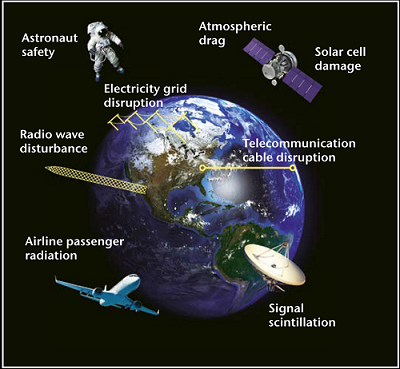
Space weather is a consequence of the behaviour of the Sun, the nature of Earth’s magnetic field and atmosphere, and our location in the solar system. The active elements of space weather are particles, electromagnetic energy and magnetic fields, rather than the more commonly known weather contributors of water, temperature and air. Magnetic fields, radiation, particles and matter which have been ejected from the Sun can interact with the Earth’s magnetic field and upper atmosphere to produce a variety of effects.
RISK IMPACTS and CONSEQUENCES
Space weather events have always occurred, but our modern reliance on technology driven systems makes us more susceptible to the impacts.
Different systems are exposed to varying levels of risk depending on technical design, location and the type of space weather that can affect them. Our challenge is to ensure new systems are designed with appropriate engineering solutions to minimize the risk posed by space weather.
The major impacts of a severe space weather event can be divided into two areas - impacts on technology on Earth and threats to equipment and health in space and at high altitude. They include:
- Power grid outages;
- Disruption to Global Navigation Satellite Systems (GNSS) / Global Positioning Satellites (GPS);
- High Frequency (HF) radio communications outages;
- Satellite damage;
- Increased radiation levels at high altitude.